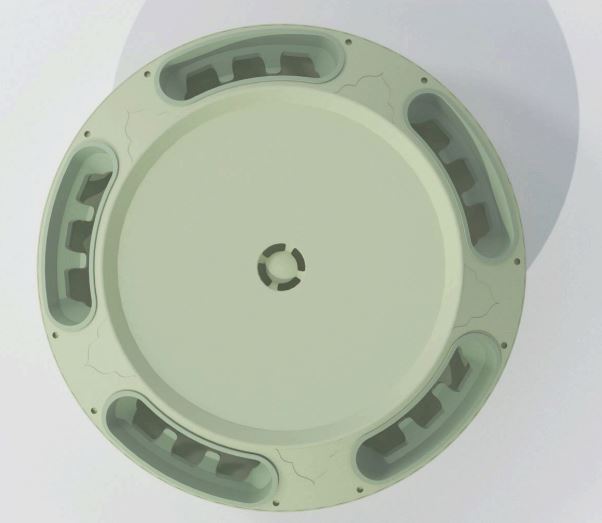
The chair is design’s most demanding problem: four legs, a seat, a back — and endless room for reinvention. The four emerging designers gathered here take on that challenge from four distinct material directions. One reaches for plant-based materials, letting the chair’s environmental footprint become part of its form. Another bends solid beech into sweeping curved forms. A third coaxes flat veneer sheets into compound curves. The last turns hollow tubes into structure and line. Together they offer a snapshot of where seating is heading — not a single style, but a shared willingness to rethink what a chair is made of, and therefore what it can be.
Hemp Chair — Veronica Olariu
Hemp fabric & pineapple-leaf fibre
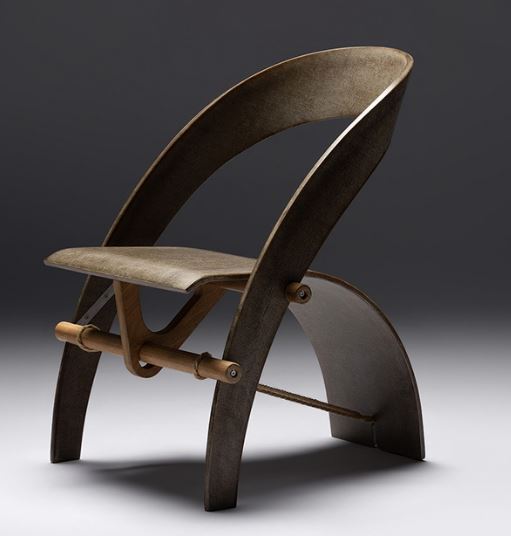
A study in counterbalance. This plant-fibre chair wears its structure on its sleeve — everything you see is doing the work, held together by balance and tension.
Dreamed up in Thailand, it mixes hemp fabric with pineapple-leaf leftovers from farms, all kept in check by a taut rope. That rope lets the whole thing stay slim and sharp, whether you’re sitting up or leaning back for a gentle spine stretch.
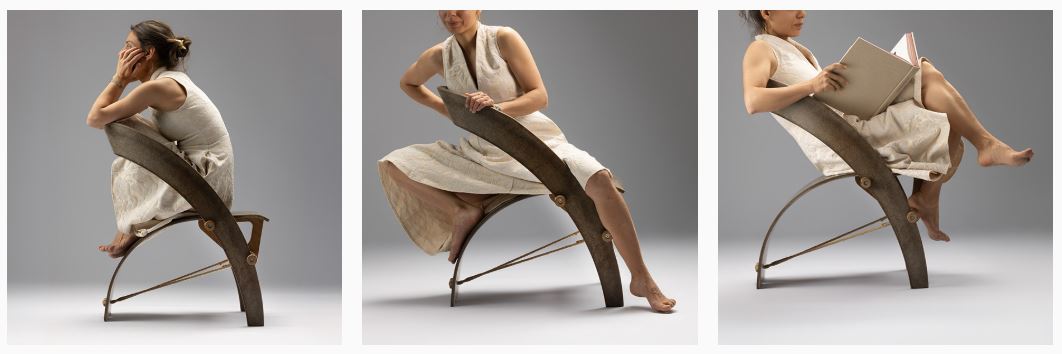
No secret frame, no divide between what you see and what holds you — just forces keeping each other in check. Hemp fabric and pineapple-leaf fibre composite shells, solid wood, and that tensioned rope make up the whole thing — continuing a deep dive into balance and structural counterweight with renewable fibres and bio-composites.
Kura Stool — Jasper Krebs & Emilie Sand
Curved solid beech
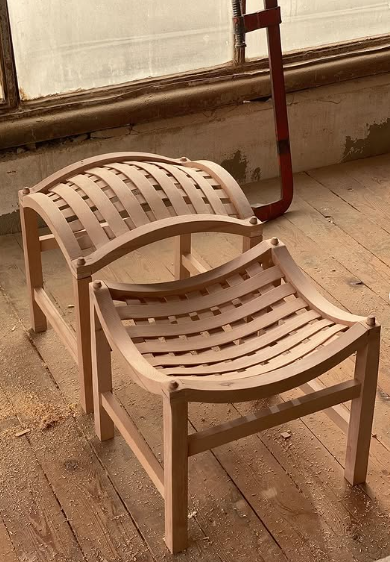
Intrigued by how a double-curved seat wraps around the body, Jasper Krebs and Emilie Sand set out to build that exact feeling into a stool — in curved solid beech. The result is a seat you can simply flip: curve up or curve down, depending on how you want to sit.
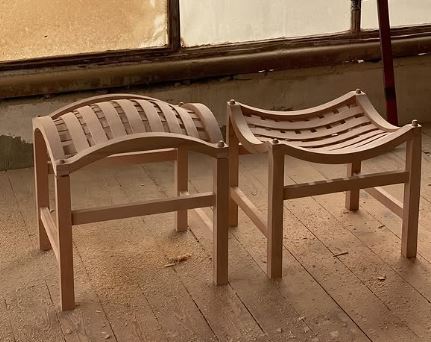
Double-curved shapes are famously difficult to produce, but they offer remarkably strong structural geometry — which is exactly why the pair persisted. Their workaround was to split the seat into a series of slats, steam-bend them, and press them into shape using 3D-printed molds. The method yields a remarkably sturdy seat, and a surprisingly comfortable — and wholly distinctive — way to sit.
Sheets — Felix Sand Sørensen
Veneer with cut-outs
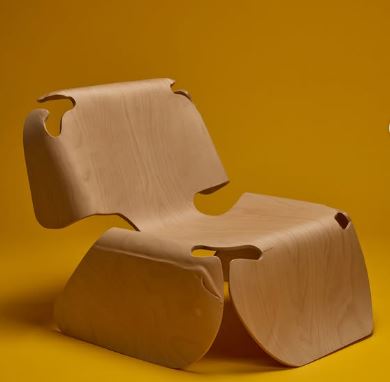
Sheets is the culmination of designer Felix Sand Sørensen’s thesis work: a lounge chair built from a series of trials investigating how veneer can achieve compound curvature by means of cut-outs. The prototype captures the project in its rawest state — embracing its creases and flaws — while showing how the cut-out can function as both a visual feature and a structural solution.
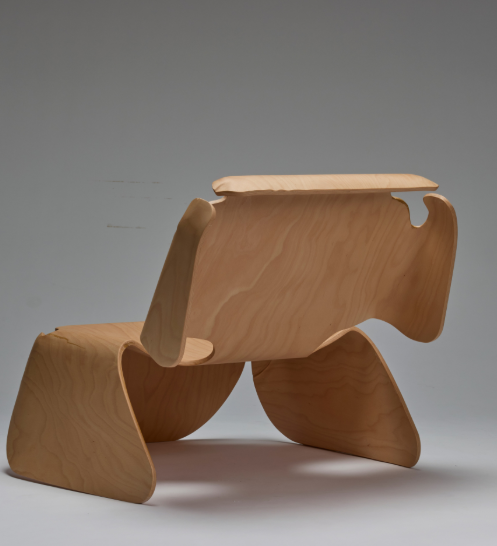
Fritz Becker GmbH & Co. KG, the leading supplier for molded plywood, solid wood and form fleece, lent its support to the project and was instrumental in shaping the finished chair.
Tube Chair — Hsuan Chu
Pressed veneer tubes
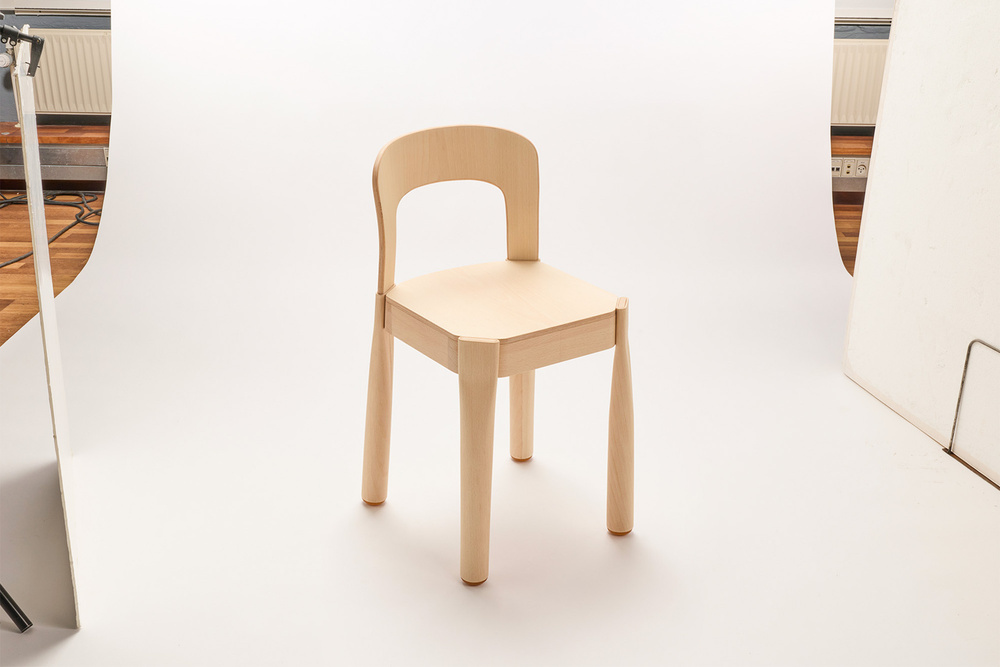
Pressed veneer tubes offer a new language for form and joinery in wood furniture. These hollow laminated tubes are strong, lightweight, and can be shaped into curves that solid wood can’t match.
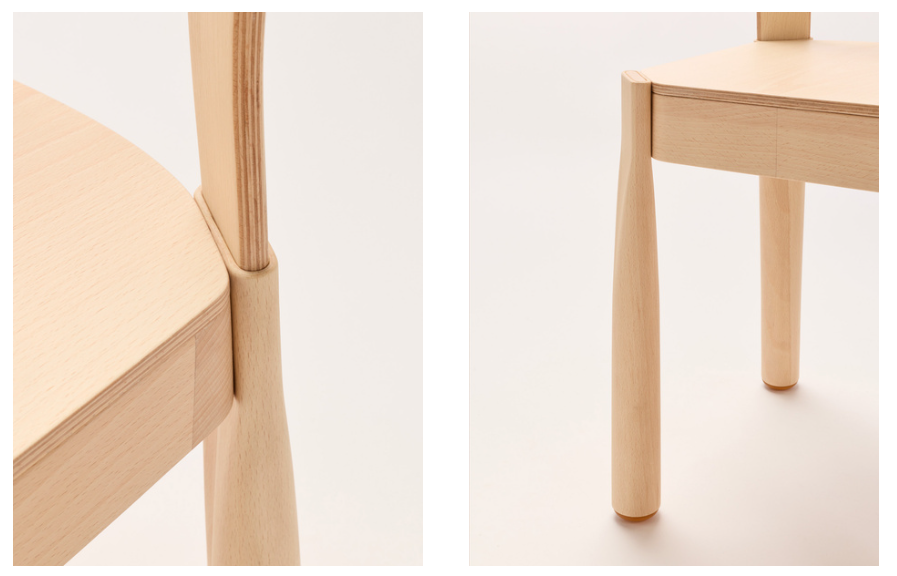
Rather than hiding the material, the design makes it the whole point: the tube’s pressed form shapes the chair and acts as the joinery itself — no screws, dowels, or traditional joints needed. The result is a chair that looks, connects, and builds differently from conventional wood furniture.
Four designers, four materials, one shared instinct: that the chair is still an open question.
Keep an eye on these names — the next generation of seating is being built one experiment at a time.