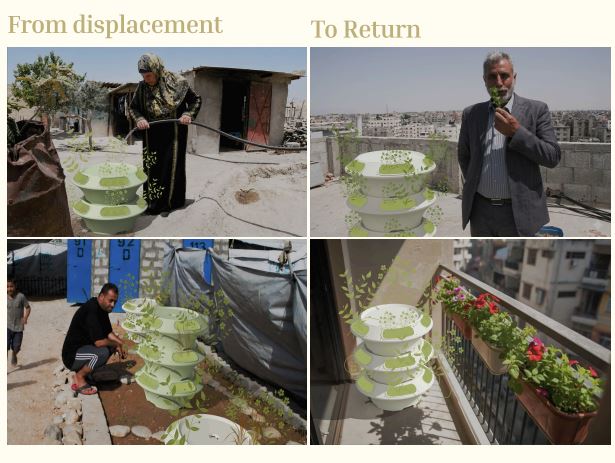
Born from the creative partnership of designers Jad Mabsout and his wife, the Juthoor planter is more than a functional object,
it is a design intervention with a conscience.
Rooted in the principles of human-centered design, it addresses the urgent realities of displacement across Bilad al-Sham—the historic region known today as the Levant, or West Asia.
Through thoughtful form, material choice, and cultural resonance, the planter becomes a quiet yet powerful tool for restoring dignity and enabling self-reliance, offering displaced families not just a product, but a means of reconnecting with purpose, livelihood, and the land.
With a simple, low-tech Kratky hydroponic system, Juthoor planter turns scarce resources into sustainable abundance.
Juthoor planter doesn’t just grow food—it grows hope, independence, and a tangible connection to the land, even when home feels far away.
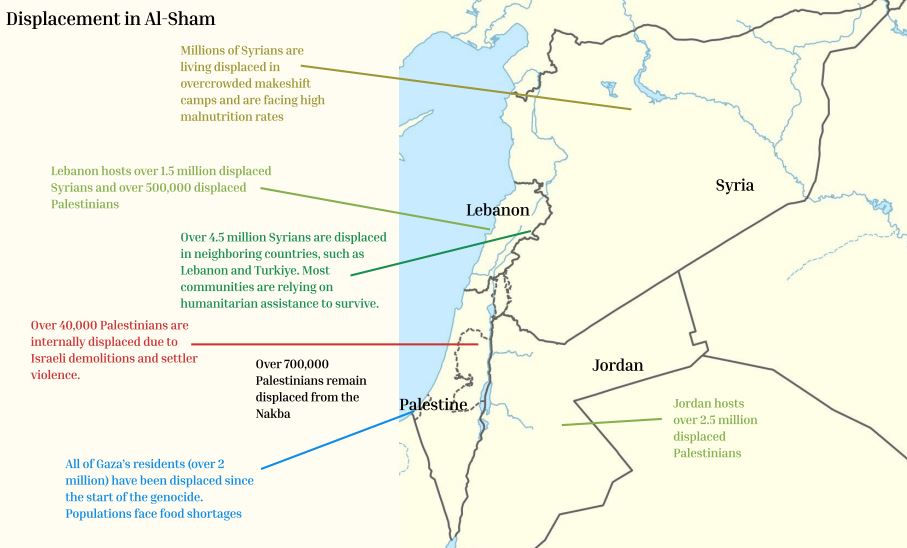
The Two Phases of Displacement
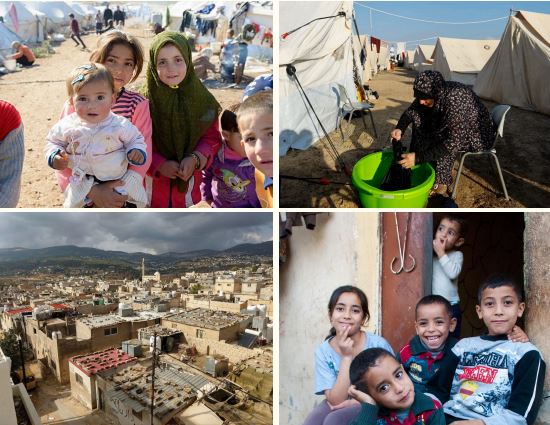
Phase 1 – Tent Camps
· Overcrowding and severe food scarcity are common.
· Soil is either contaminated or lacks nutrients, offering no space for viable gardening.
Phase 2 – Permanent Refugee Camps
· Strict reliance on food aid and fixed rations eliminates autonomy.
· Diets remain consistently low in nutritional value.
The Problem with Aid Parcels
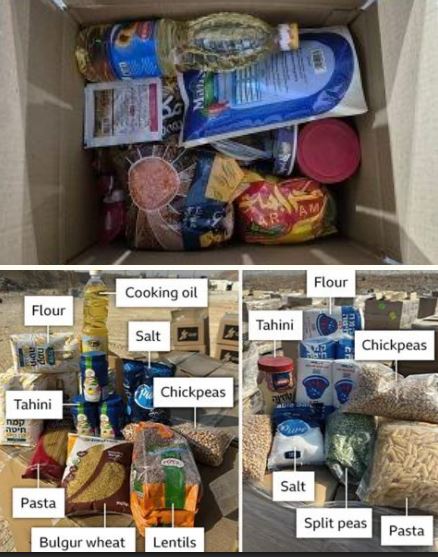
A typical aid parcel is a box of processed staples: rice, flour, oil, and dried legumes.
Fresh produce is absent. For families relying on these handouts, this monotonous diet drives malnutrition—a direct contributor to mortality in displacement settings. But the nutritional gap is only half the crisis.
Because aid is externally controlled, any disruption—whether a military blockade or a halted supply convoy—can cut off food entirely, turning chronic deficiency into acute starvation overnight.
Love for the Land and Gardening
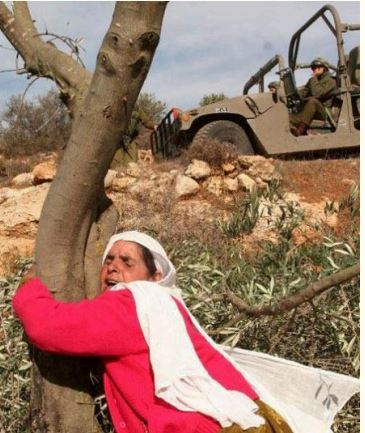
· Agriculture and home gardening are foundational to Shami culture—from ancient olive pastures to tiny balcony plots.
· Every Shami family shares a deep, inherited bond with the soil and what it produces.
· For most displaced Shamis, that connection is now broken—they no longer have access to the land that shaped their identity.
· Across Palestine and southern Lebanon, Israel has destroyed farmlands and gardens systematically, using agricultural devastation as a weapon of war.
The Core Problem
Aid parcels meant for displaced Shami communities fall short—nutritionally poor and too often blocked by military sieges. But the crisis isn’t just about food. For people already exiled from their land, destroying gardens is destroying identity itself. What they need is clear: access to grow their own food, pathways to self-reliance, and an aid system that actually delivers.
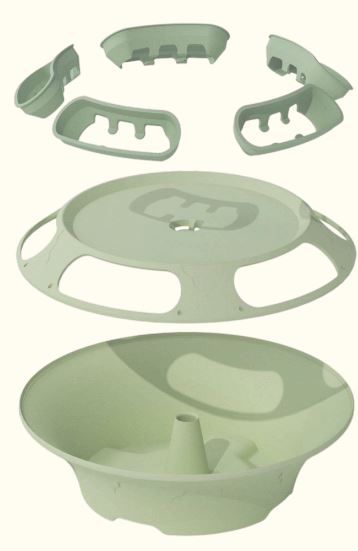
Introducing Juthoor planter.
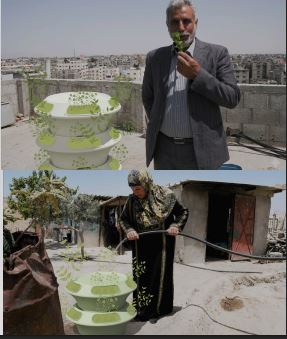
Juthoor planter is a stackable, modular hydroponic planter engineered for high yield in small spaces—and designed with displaced Shami communities at its heart. It isn’t just about growing food; it’s about restoring agency, dignity, and a piece of cultural identity.
The numbers speak for themselves: three units can grow enough vegetables to meet up to 50% of a family of four’s daily needs. No power source is required—just sunlight, water, and a simple nutrient mix.
Affordable enough for households and scalable for NGOs, Juthoor is user-friendly from setup to harvest, with an easy-to-manage nutrient delivery system that removes the usual barriers to successful gardening.
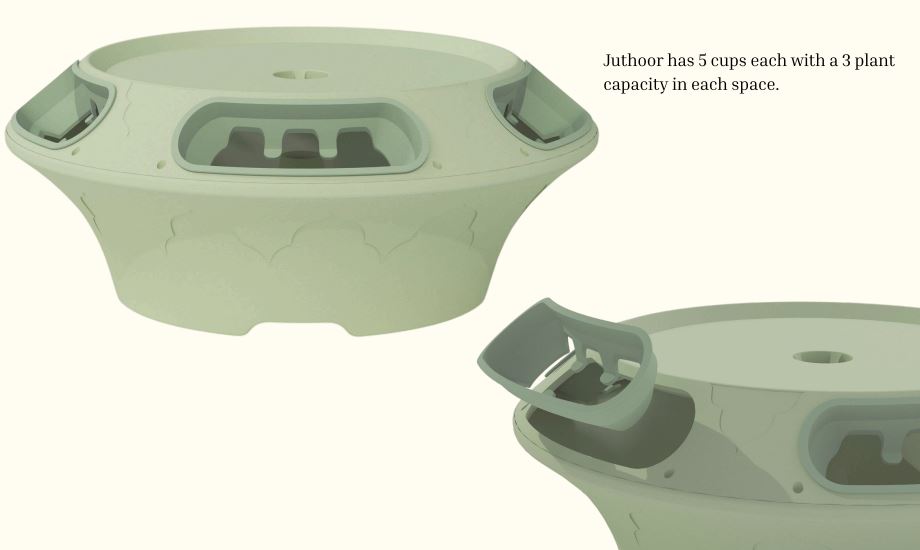
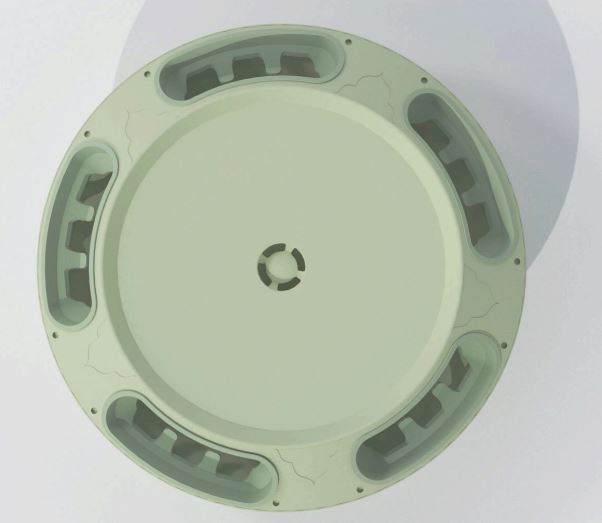
Each Juthoor unit comes with 5 individual growing cups, and each cup holds up to 3 plants at a time. That means a single system can support 15 plants simultaneously—maximizing yield in minimal space.
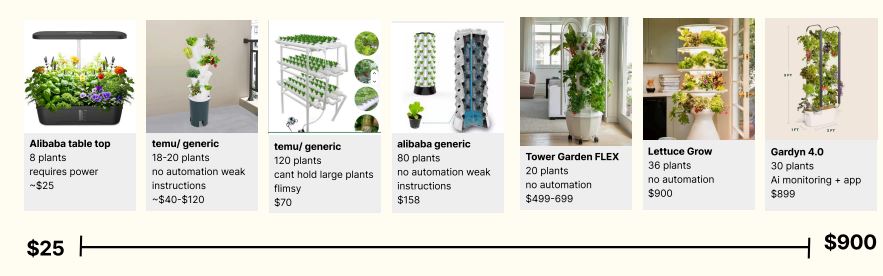
The current hydroponic market misses the mark for refugees. Commercial units are too costly, too complicated, and culturally out of touch.
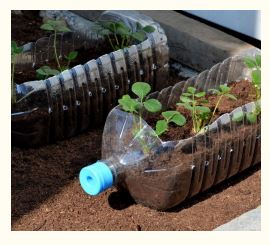
Meanwhile, home-built solutions are unsafe and inefficient—offering low yields, high water usage, and the frustrating catch of still requiring soil.
Engineered with safety in mind, this material is completely free of BPA, phthalates, and PVC, ensuring no chemical leaching and full FDA/USDA approval for food contact. Its robust construction resists moisture, UV rays, and extreme conditions, while its highly recyclable composition makes it a significantly more sustainable choice over metals and conventional resins.
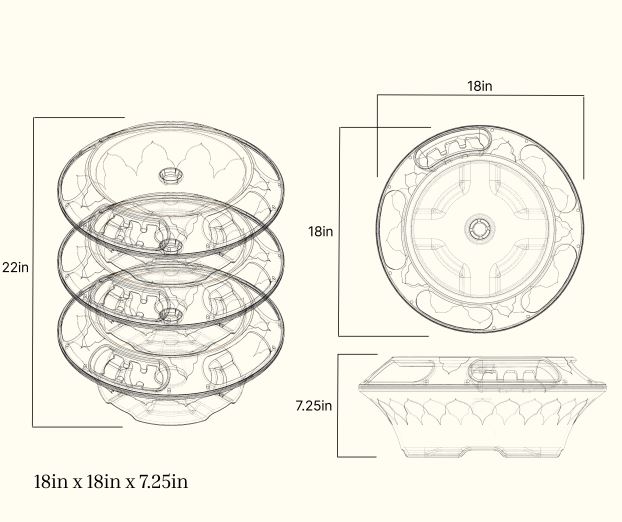
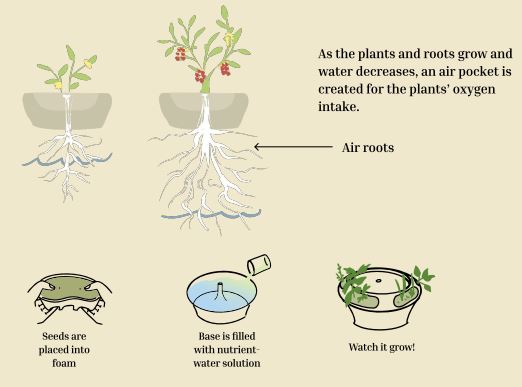
How It Works: Juthoor planter operates on the Kratky Method, a non‑circulating, passive hydroponic system first developed by Dr. Bernard Kratky. The approach requires no electricity or moving parts—only a supply of water, dissolved nutrients, and adequate sunlight.
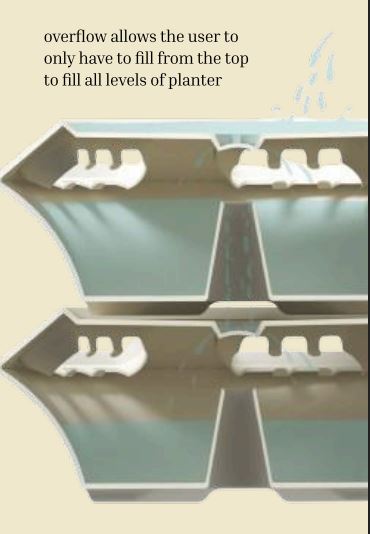
Thanks to the overflow design, filling from the top is all it takes—the water distributes evenly to all levels of the planter without any extra effort.
As plant growth progresses and water is gradually absorbed, a natural air pocket develops, providing essential oxygen for the roots.
Juthoor planter timeline
The journey of the Juthoor planter’s designers begins with a single, powerful act of support—fueling everything from the design and creation of custom tooling and molds, to the production of their very first batch, all the way to delivering those initial products into the world.
From there, they move into full-scale manufacturing, then turn their focus to the field: transporting units to remote communities, building a dependable nutrient supply system, and putting resources directly into the hands of families.
But they don’t stop at distribution. They’re equally committed to education—equipping local communities with the training and knowledge they need to sustain and benefit from the work long after the initial rollout.
Looking ahead, their vision is anchored in longevity: they’re building a self-sustaining model that not only keeps their operations running, but also allows their impact to grow, adapt, and endure for generations to come.